California Hunting Ranches and Clubs for Turkey Hunting

Powered byEMF Contact Form
Showing posts with label ranches. Show all posts

Saturday, March 11, 2023

How to Call CaliforniaTurkeys and Best Type of Turkey Calls 2023 to Use for Beginners, plus Hunting Clubs and Ranches

Not only where to and how to HUNT TURKEYS also you get access to our giant free hunting and fishing Map site, with how to fish and where to fish or hunt these Public lands. Get access to Hunting Clubs and Private ranches for fishing and hunting. Always free with no strings attached to help preserve our Outdoor Heritage. 
Fill out form for California or Oregon Hunting or fishing on Public Lands, Hunting Clubs and Private Hunting Ranches


How to Call Turkeys and Best Type of Turkey Calls to Use For Beginners

Here we discuss first the different types of calls and their attributes. We then discuss how to use and what we consider the best type of call for the beginning turkey hunter
So what are the types of calls ?
 Pot or Striker Call
a mouth call for turkeys how to use a mouth call
Mouth call 

  
Box Call
a box call for turkeys how to use a box call
 
So which of these should you use?
Well that depends, each has advantages. Our criteria rates: ease of use first, quality and variability of sound next, and functionality last.
Mouth Call
Operation:
  • Similar to a dental retainer, only softer, more pliable to adjust with tongue
  • Makes sound by blowing air through the space between it and the roof of your mouth.
  • You can make 3 different sounds Yelp, Cutt, Cluck .
Yelp- mimics a Hen yelp (no gobble sound) just a quick noise
Use: Literally say the word "yelp" into the call, as you want an abrupt end to the sound
Cutt- excited clucking of Hen
Use: Sharply saying "tick", vary between one, two, or three notes at a time, never lots of ticks without a break..
Cluck - Single cluck of Hen
Use: Say "puhht" using your lips to make a soft, short pop sound.
Functionality: Best of all calls since no movement of hands to give you away
Sound: Probably the best sound, but you need a lot of practice to get there
Ease of use: Hardest of all three but most versatile leaving your hands free
Striker or Pot Calls- use friction of striker to mimic a hen

Operation: Keep striker in between edge and middle of the plate, never in the middle or on the edge
Yelp
Use: make circles with the striker gets a "wow" or make a hook shape for the the more natural sounding "yeeow"
Cluck
Use: Pull the striker towards you from middle like you were lighting a match
Cutt
Use: Clucks are strung together and more louder, defined or sharp sounding
Functionality: Has two parts and is not hidden from view so least functional of the three, requires visual attention

Sound: Best sound realism
Ease of use: Second of three in terms of ease of use
Box Calls
Operation: Rub a piece of chalk into lip of both sides box. Scrape lid across lip of box.

Yelp
Use:
  • Hold the call in one hand a scrape the lid with the other and run the lid. You want a high and low note (two notes) in one motion
  • Note how spring allows you to angle the lid
  • Angle it as you begin scape, get the high note, then relax angle as you continue scrape to get low note
Cutt
Use:
  • Keep lid in contact with call to avoid a rapping sound, and pull across lip of box.
  • Move or allow handle to drop down to start position by gravity.Repeat call.
Fucntionality: Only one piece, can use it withour looking at it, so second best of all calls
Sound: Second best of all calls
Ease of use: Best of all calls
Overall the Box Call seems the most desirable for the new Turkey hunter. We like how the mouth call frees your hands and hides them from the turkeys telescopic vision. But harder to learn than the others.
The Striker/Pot call requires two pieces, so getting it out of you bag or vest quickly and quietly is more of a problem. Plus, until you become well practiced, you have to take your eyes away from a target to look at where you are striking.  A box call can be used while  your eyes are scanning for movement.
So in our opinion the box call is the best for the beginning turkey hunter.  One note of warning: it can be noisy in your pocket as you move through the woods. Have fun and we hope this helps you get a Turkey.  See our other blogs for maps , best guns, locating a turkey and how to decoy. And below is areas to hunt near where you live. 
 
 PLEASE SUPPORT OUR 100 PLUS HUNTING AND FISHING BLOGS BY HELPING OUR SPONSOR OF HUNTING RANCHES BY CLICKING HERE
 
best turkey hunting ranches in california


How to Hunt Turkeys California, Oregon: Decoy, Call and locate Turkey

How to Hunt Turkeys: Decoy, Call and Understand Turkey Behavior for Hunting in California, Oregon


Here you get access to our giant free hunting and fishing Map site, with how to fish and where to fish or hunt these Public lands. Get access to Hunting Clubs and Private ranches for fishing and hunting. Always free with no strings attached to help preserve our Outdoor Heritage. Click on a County for California or Oregon Hunting or fishing on Public Lands, Hunting Clubs and Private Hunting Ranches

how to call turkeys and set up turkey decoys
See below on how to Call/Decoy


We have many maps see "achived Blogs" on the right
We have many Maps for
everything......see "Archived
Blogs" to the right to see more
 turkey behavior and how to understand colors and group action
 Talk about your Angry Bird!

 How to Hunt Turkeys: Decoy, Call and Understand Turkey Behavior in California and Oregon...

First, a couple interesting Maps (we are a little map crazy around here)
Historical Turkey Range:
  
Map of original distribution of turkeys and where to find turkeys


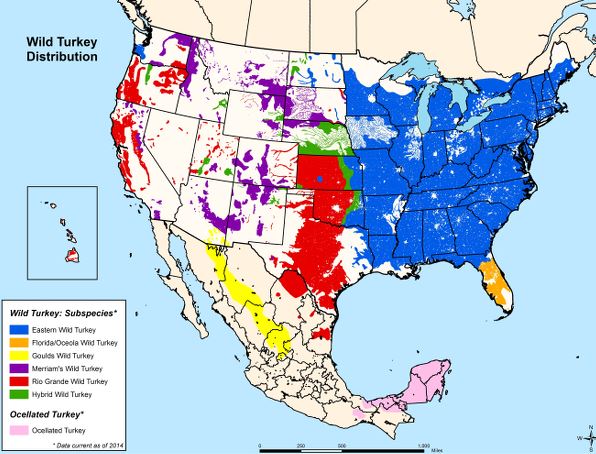
map of turkey populations in the United states, wjere to hunt turkeys

Current Turkey Range (2019)
 Wild Turkeys were almost extinct in the USA (down to 500 birds) at one time...talk about a come back!
PART I

When stalking and calling turkeys it's wise to note their behavior. There are tell-tale signs they display in their body movements and physiological changes.
  • If you notice these you'll have a more successful hunt

THE STRUT
  • Does a grossly exaggerated walk "the strut"
  • He has heard your call or seen your decoy and
  • Means he is very interested in mating or finding a mate
  • He comes straight in, no problem keep clucking
  • IF he suddenly stops just out of range- he is suspicious- DESIST your calling, he senses you're so excited, he decided to wait for you
  • He will then approach closer, so stay quiet, literally don't even blink

HEAD AND NECK SKIN DISCOLORATION

No kidding it goes from bluish-white (calm) to deep red (he's worried or mad) depending on his mood
  • If if he stops and his head turns red he is suspicious
  • If you see this you better take your shot
INFLATION OF THE SNOOD (turkey’s nose area fleshy droopy tissue is the "snood") 

  • Contracts and expands depending on whether he is calm or confused
  • Starts to contract  better start worry hew sees you
  • Contracts all the way up past his beak take your shot
HEN'S BEHAVIOR TO DOMINANT MALES, HUMANS CAN ONLY WISH
  • Upon encountering a male, Hens will lay down and submissively face away
  •  Human Males appreciate this behavior in females, saying, in part, "I only wish...."
 PART II Calling and Decoys (see below):

PART II  Turkey Calling and Using Turkey Decoys

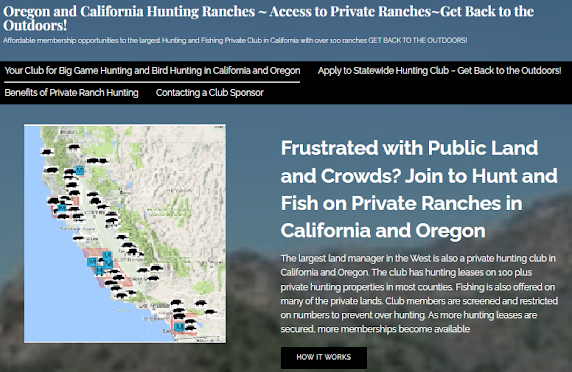
Could you take a break and SUPPORT OUR 120 INFO BLOGS A network of 50+ Hunting clubs and large ranches with family camping. Some fishing farm ponds and trophy fly only trout. Screened membership for safety. Available statewide for $100 to $200 per month when openings available-They have a screened membership and have not had a hunting accident in two decades of operation

Click on Image for more info
 
hunting ranches and hunting clubs in california and best areas

 HOW TO DECOY TURKEYS

DECOY, TURKEY, CALL TURKEY


 Spring gobblers  have supernatural vision.  They don't have eyes, they  have dual 400-power spotting  scopes  Turkeys also seem to know your  human form better than your own  mother knows it, and can pick you  out of indecently heavy cover.  What’s needed is something to  divert the gobbler’s attention from your position while he approaches  the sound of your call. Decoys are  about the greatest boon to spring tur-  key hunting since the box call.
 Decoys preform two important  functions They are atractors: once  you have called a gobbler into view  of that decoy, he will fall instantly in  obsessive, possessive love with that  decoy.  The decoy really brings in the  toms close.
With a decoy, gobblers frequently hang up and get  reluctant at 50 to 100 yards out After  all, they are used to having the hens  come to them. Decoys bring them in  close — close enough to get right on  top of that deke!  Decoys also divert attention away  from the hunters; when he's looking  at the decoy, he can’t be looking at  you. That really takes a lot of the  pressure off.
Here are a few tips from turkey  guides on decoying spring gobblers in the North State:
 1. Place the deke in a clearing,  with good brush cover for the hunters behind it
Make sure there is a  good clear field of vision of 100  yards or so along the avenue from  which the gobblers are most likely to  approach. The sooner they spot your  decoy, the better.
2. Place the caller a bit off to the  side from the decoy, not directly  behind
3. Place the hunter on the  flanks of the caller, so they don‘t have  to move much to get a likely shot.

 Start calling when you are set  up in your blind — but stop calling  once that tom sees that lane. He‘ll  take it from there. Only if he loses  interest should you use a soft coaxer.  I The best dekes have their necks  down, not up. Down necks on a hen  communicate a kind of submissive,  come-hither sex message. Heads up  mean danger - look out.

 Make sure hunters wear full  camo, keep still and sit in position  with shotguns resting roughly in the  direction you expect the birds to be  coming from.  Plot a shot grid around the deke  so you know your range. It’s easy to  get excited about a 70-yard shot that  looks like 40 yards Pace off some  distances so you know your shot  grid.  Use these decoying tactics in your  favorite turkey hunting area and  you’l1 score! Try Shasta, Tehama,  Butte, Yuba, Nevada, Placer, El Dorado, Mendocino and Monterey  counties!       
Scroll down after viewing our access to 100+ ranches, and our Map site with hundreds of Maps...