California Hunting Ranches and Clubs for Turkey Hunting

Powered byEMF Contact Form
Showing posts with label turkey hunting. Show all posts

Friday, November 3, 2023

2024 Fall and Spring Turkey Hunting in California's San Diego County's Cleveland National Forest, and San Bernadino Hunting clubs and Ranches


  2024 Turkey Hunting Map and Report also Hunting Clubs, Private Ranches in San Diego, Imperial, San Benito, San Luis Obispo, Monterey and San Diego

  Central Coast Turkey Areas Mapped:


Turkey Hunting  Maps and reports in Southern California

california turkey hunting cleveland national forest, how to hunt california, how to hunt san diego, how to hunt san bernadino


   San Diego County Turkey Hunting Improves in National Forests!


THE NATIVE population of Rio Grande turkeys has increased the past couple of years. Thanks to back-to-back good breeding. seasons,  good carryover of jakes and big toms and lots of
private ranches where turkeys can get away from hunting pressure, the outlook for years to in the southern portion of the Cleveland National Forest is very optimistic.
"Turkeys are doing very well in San Diego County and we are seeing an ever increasing dispersal of birds into new areas each year," state wildlife managers there.
Over the past few year; spring turkey hunting pressure has been very high in San Diego County on open hunting 'land within BLM boundary lines and of the Cleveland National Forest.
Private Ranches in San Diego also are heating up the writer suggests sites he has made for his real estate clients (mostly ranchers) to help them keep their properties after purchase...has lots of SoCal ranches, exclusive and not well known..


  Access to hunting in San Benito varies, you may want info for access to join a network private ranches, hunting clubs in that area and statewide. They sponsor this blog and we highly recommend it, and your family can accompany you.

Latest News Turkey Hunting Cleveland Forest 2018 and San Diego Hunting

Turkey-hunting opportunities that dried up so to speak, with the on going drought that has ensued the last few years. That should change soon. But San Diego County  still has fair or more hunting in the Descanso and Palomar ranger districts in the Cleveland National Forest. On private ranch land there are much more turkeys towards Palomar Mountain.
See More below on HOW TO SCOUT FOR TURKEYS 
 

 SCOUTING FOR TURKEYS

Hunters should study the habits of wild turkey and take every opportunity to scout an the grass is green on the hills, this is the right moment to take a .22 and hunt for ground squirrels. They are harder hunting than you might think.
 The skills you develop on these little rodent pests will serve you well later on in the year for cottontail rabbit hunting, and in the fall, the stalking skills you practiced in the spring will help you bag that deer this year.
Look for ground squirrels along the edges of cultivated land (make sure you have the landowner's permission to hunt) or in the rocky foothills of the desert and the Cleveland National Forests.
 It's almost impossible to walk up to a turkey hunting in the mountains of San Diego County, so do most of your hunting once you have picked out a spot to set up. Turkey Hunting on the move will do nothing more than keep pushing birds farther away from you.
As the second peak season starts winding down, gobblers begin searching out any remaining non-nesting hens or those hens whose nest may have been destroyed-by predators or the elements. During this period, which traditionally takes place the last two weeks of the spring season, toms will be expanding their area in hopes of locating a cooperative hen. This could mean that a tom coming off a roost might travel as many as 10 miles a day looking for a breed able hen. This is when calling a lone tom into a decoy becomes more effective.
Also at this time of the season, hunters will start seeing more jakes on the move as they become more mature and develop breeding instincts, thus becoming competitors to bigger gobblers that still maintain a strong breeding urge.
Speaking of different species for hunting in California , another site to use is , where you can get maps to public and private ranches, no strings attached, and contact info too....


Saturday, March 11, 2023

How to Hunt Turkeys California, Oregon: Decoy, Call and locate Turkey

How to Hunt Turkeys: Decoy, Call and Understand Turkey Behavior for Hunting in California, Oregon


Here you get access to our giant free hunting and fishing Map site, with how to fish and where to fish or hunt these Public lands. Get access to Hunting Clubs and Private ranches for fishing and hunting. Always free with no strings attached to help preserve our Outdoor Heritage. Click on a County for California or Oregon Hunting or fishing on Public Lands, Hunting Clubs and Private Hunting Ranches

how to call turkeys and set up turkey decoys
See below on how to Call/Decoy


We have many maps see "achived Blogs" on the right
We have many Maps for
everything......see "Archived
Blogs" to the right to see more
 turkey behavior and how to understand colors and group action
 Talk about your Angry Bird!

 How to Hunt Turkeys: Decoy, Call and Understand Turkey Behavior in California and Oregon...

First, a couple interesting Maps (we are a little map crazy around here)
Historical Turkey Range:
  
Map of original distribution of turkeys and where to find turkeys


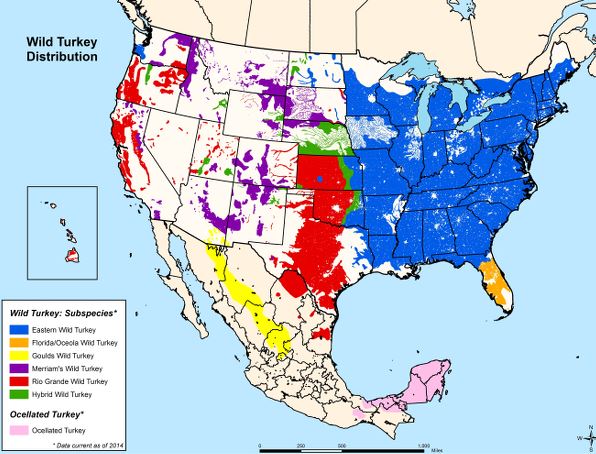
map of turkey populations in the United states, wjere to hunt turkeys

Current Turkey Range (2019)
 Wild Turkeys were almost extinct in the USA (down to 500 birds) at one time...talk about a come back!
PART I

When stalking and calling turkeys it's wise to note their behavior. There are tell-tale signs they display in their body movements and physiological changes.
  • If you notice these you'll have a more successful hunt

THE STRUT
  • Does a grossly exaggerated walk "the strut"
  • He has heard your call or seen your decoy and
  • Means he is very interested in mating or finding a mate
  • He comes straight in, no problem keep clucking
  • IF he suddenly stops just out of range- he is suspicious- DESIST your calling, he senses you're so excited, he decided to wait for you
  • He will then approach closer, so stay quiet, literally don't even blink

HEAD AND NECK SKIN DISCOLORATION

No kidding it goes from bluish-white (calm) to deep red (he's worried or mad) depending on his mood
  • If if he stops and his head turns red he is suspicious
  • If you see this you better take your shot
INFLATION OF THE SNOOD (turkey’s nose area fleshy droopy tissue is the "snood") 

  • Contracts and expands depending on whether he is calm or confused
  • Starts to contract  better start worry hew sees you
  • Contracts all the way up past his beak take your shot
HEN'S BEHAVIOR TO DOMINANT MALES, HUMANS CAN ONLY WISH
  • Upon encountering a male, Hens will lay down and submissively face away
  •  Human Males appreciate this behavior in females, saying, in part, "I only wish...."
 PART II Calling and Decoys (see below):

PART II  Turkey Calling and Using Turkey Decoys

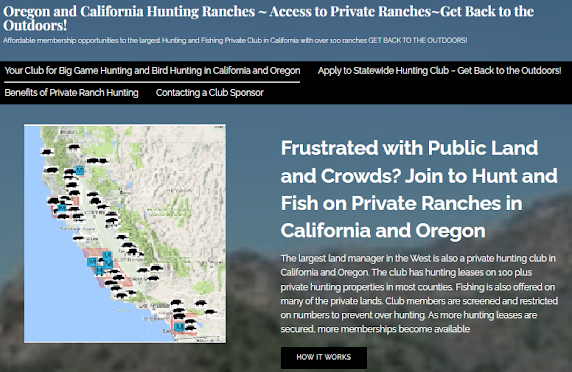
Could you take a break and SUPPORT OUR 120 INFO BLOGS A network of 50+ Hunting clubs and large ranches with family camping. Some fishing farm ponds and trophy fly only trout. Screened membership for safety. Available statewide for $100 to $200 per month when openings available-They have a screened membership and have not had a hunting accident in two decades of operation

Click on Image for more info
 
hunting ranches and hunting clubs in california and best areas

 HOW TO DECOY TURKEYS

DECOY, TURKEY, CALL TURKEY


 Spring gobblers  have supernatural vision.  They don't have eyes, they  have dual 400-power spotting  scopes  Turkeys also seem to know your  human form better than your own  mother knows it, and can pick you  out of indecently heavy cover.  What’s needed is something to  divert the gobbler’s attention from your position while he approaches  the sound of your call. Decoys are  about the greatest boon to spring tur-  key hunting since the box call.
 Decoys preform two important  functions They are atractors: once  you have called a gobbler into view  of that decoy, he will fall instantly in  obsessive, possessive love with that  decoy.  The decoy really brings in the  toms close.
With a decoy, gobblers frequently hang up and get  reluctant at 50 to 100 yards out After  all, they are used to having the hens  come to them. Decoys bring them in  close — close enough to get right on  top of that deke!  Decoys also divert attention away  from the hunters; when he's looking  at the decoy, he can’t be looking at  you. That really takes a lot of the  pressure off.
Here are a few tips from turkey  guides on decoying spring gobblers in the North State:
 1. Place the deke in a clearing,  with good brush cover for the hunters behind it
Make sure there is a  good clear field of vision of 100  yards or so along the avenue from  which the gobblers are most likely to  approach. The sooner they spot your  decoy, the better.
2. Place the caller a bit off to the  side from the decoy, not directly  behind
3. Place the hunter on the  flanks of the caller, so they don‘t have  to move much to get a likely shot.

 Start calling when you are set  up in your blind — but stop calling  once that tom sees that lane. He‘ll  take it from there. Only if he loses  interest should you use a soft coaxer.  I The best dekes have their necks  down, not up. Down necks on a hen  communicate a kind of submissive,  come-hither sex message. Heads up  mean danger - look out.

 Make sure hunters wear full  camo, keep still and sit in position  with shotguns resting roughly in the  direction you expect the birds to be  coming from.  Plot a shot grid around the deke  so you know your range. It’s easy to  get excited about a 70-yard shot that  looks like 40 yards Pace off some  distances so you know your shot  grid.  Use these decoying tactics in your  favorite turkey hunting area and  you’l1 score! Try Shasta, Tehama,  Butte, Yuba, Nevada, Placer, El Dorado, Mendocino and Monterey  counties!       
Scroll down after viewing our access to 100+ ranches, and our Map site with hundreds of Maps...


2024 Lake Shasta Turkey Hunting on Public Hunting Land where to find turkeys Shasta lake Spring and Fall


  2024 Lake Shasta Turkey Hunting Map and Report, Public Lands, Hunting Clubs and Private Ranches


map of turkey hunting at Lake Shasta and access best areas


Lake Shasta Turkey Hunting  Public Hunting Land where to find turkeys Shasta lake


The Lake Shasta area has lots  of turkeys, lots of public land!   It's turkey hunting  time in Northern California and  Lake Shasta is the place to bag that  trophy gobbler. Turkey hunting  is the fastest growing hunting sport  in California and the national forest that borders  Lake Shasta ranks as the No. l turkey producer in  the state. The steep rugged hillsides above the lake  are a haven for hundreds of wild turkeys.

Much of the prime turkey hunting areas in  California are on private land where gaining permission is increasingly difficult, however, we have over 100 private ranches or hunting club  ready for you. See our info below, or head up to Shasta. Or, do both!

 Hunters can reach  many of turkey hunting areas by vehicle.  But hunters who want to escape the pressure of  other hunters can travel by boat to the more remote  areas that have an abundance of turkeys and few  hunters.  The most popular turkey hunting area is Backbone Ridge above the Pit River Arm of the lake.  Hunting pressure on Backbone Ridge can be  intense, but if you’re willing to hike a mile or two  off the road, you can find solitude and the old toms  with their harems of hens.

Backbone Ridge can be reached from Jones  Valley. The road follows the ridge line and comes  out at Fenders Ferry. There are good populations of  turkeys along the entire length of Backbone Ridge.  Madrone Camp and Little Round Mountain are  other good areas for turkeys The steep rugged hills  and heavy timber will make you work hard for  your gobbler, but these areas hold some monster Toms..

 Boats can be launched at  Jones Valley and there are several boat-in campgrounds in the Squaw and Pit River arms. Hunters who boat in are often discouraged by  the dense cover of chapparal that covers the hillsides near the lake shore. The peaks of these hills  are usually covered with thick stands of  oaks and have open glades Most of  these open glades will hold small flocks  of turkeys. All you need is a little lung  and leg power.

 Bully Hill on the Squaw Arm also  holds turkeys. This is a brushy area and  at first glance doesn’t look like turkey  habitat. But there are flocks scattered  throughout the area.  The past few years, hunters have also  discovered turkeys in both the McCloud  and Sacramento arms of the lake.  Locating turkeys is actually more difficult than hunting and calling the  birds. Wild turkeys are one of the most  elusive animals in the woods. Just  because you don’t hear turkeys gobbling, doesn’t mean there are no turkeys  in the area. The turkeys around Lake  Shasta have been hunted hard and they  have become very cautious about  responding to a call.

One of the best methods of locating  turkeys at Lake Shasta is to talk to the  bass fishermen. These fishermen are out  on the lake at daylight when the turkeys  are most vocal. Since many of fishermen don‘t hunt, they will usually tell  you where they have seen and heard  turkeys.

Another method of locating an old tom is to slowly cruise the arms of the  lake. Stop often and use a turkey or crow  call. lt’s not unusual for a gobbler to  answer your call from as far away as a  half mile.  Late afternoon is an ideal time to  locate turkeys for the following day.  Remember, all turkey hunting must stop  at 4 p.m.. If you hear a gobble, mark the  area and return the next morning at least  one hour before daylight.  The best time to hunt Lake Shasta is  mid-spring, during mating season. The weather is usually mild  and the hens have already started to  leave the flocks to nest. The gobblers  are on the prowl and can be called in...

California hunting clubs, hunting ranches, public and even private fishing


Hunting private lands in California has several advantages over the public areas. Chief among these are much less hunting pressure, better forage and water supplies and easier vehicle access. It's a fact of life, and hunting on private ranches is almost a sure thing.\
 
SUPPORT OUR FREE INFO BY CONSIDERING OUR SPONSOR:
A network of 50+ Hunting clubs and large ranches with family camping. Some fishing farm ponds and trout. Screened membership for safety. Available statewide for $100 to $200 per month when openings available-
They have a screened membership and have not had a hunting accident in two decades of operation

CLICK ON IMAGE  FOR MORE INFO